Selecting the right steel grating structure is essential for industrial projects where load capacity, appearance, and long-term performance are important. Different grating manufacturing methods can affect strength, installation efficiency, and application suitability.
press locked grating has become a popular option for engineers who require a strong and uniform flooring solution. Compared with traditional welded grating, its unique interlocking structure provides different advantages in industrial platforms, walkways, and architectural applications.
Understanding the manufacturing process, performance differences, and selection factors can help project teams choose a more suitable grating solution.
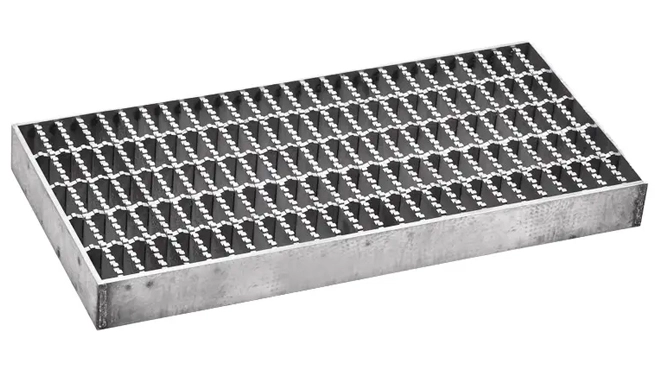
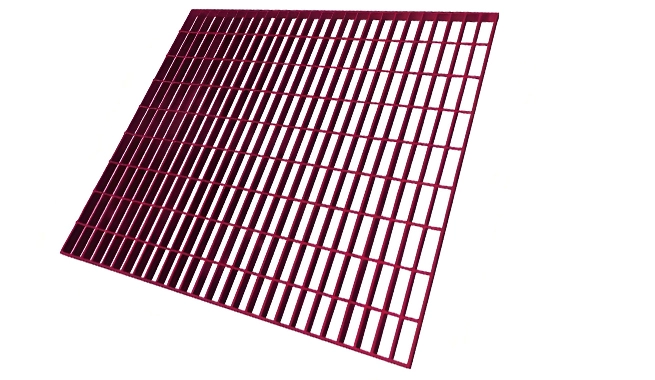
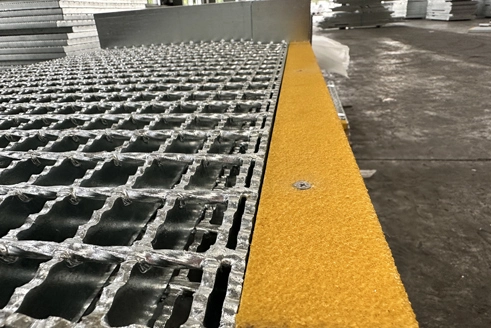
Press locked grating is a type of steel grating manufactured by pressing cross bars into bearing bars under high pressure to create a strong mechanical connection. Unlike welded grating, which uses welding points to join components, this structure relies on precise slotting and pressure locking technology.
The interlocked design creates a flat and consistent surface while maintaining excellent load-bearing performance. Because the connection points are evenly distributed, the finished product has a clean appearance and reliable structural stability.
This type of grating is widely used in areas where both strength and visual quality are required, including industrial platforms, walkways, stair treads, and architectural structures.
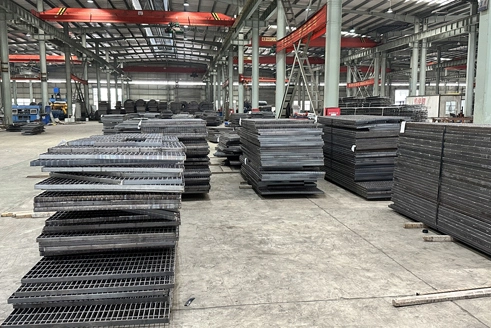
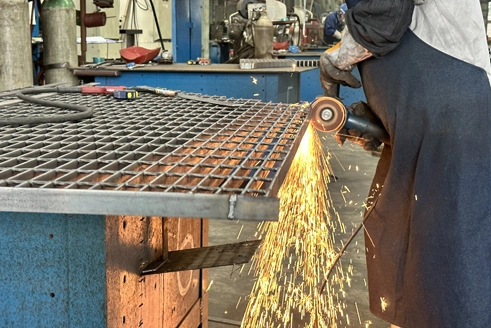
The production process of pressure locked steel grating focuses on accurate cutting, slotting, and assembly. Bearing bars and cross bars are prepared according to the required specifications, then assembled through a high-pressure locking process.
This manufacturing method creates a tight connection between the bars without relying on visible welding points. The result is a strong and uniform panel that can maintain stable performance under different working conditions.
Depending on the application environment, surface treatments such as galvanizing can also be applied to improve corrosion resistance. For outdoor or industrial projects exposed to moisture, protective coatings help extend the service life of the grating system.
The manufacturing flexibility also allows different bar spacing, dimensions, and load requirements to be customized according to project needs.
Both press locked and welded grating are widely used in industrial applications, but their structures and characteristics are different.
| Feature | Press Locked Grating | Welded Grating |
|---|---|---|
| Manufacturing | Pressure locking | Welding |
| Appearance | Smooth and uniform | Visible weld points |
| Load Capacity | High | High |
| Customization | Flexible | Flexible |
| Surface Design | Consistent interlocking structure | Traditional welded structure |
Welded grating remains a common choice for heavy-duty applications because of its strong welded connections. However, press locked bar grating provides advantages where appearance, precise structure, and design flexibility are important.
For projects requiring a clean surface and architectural appearance, the uniform structure of press locked solutions can provide additional value.
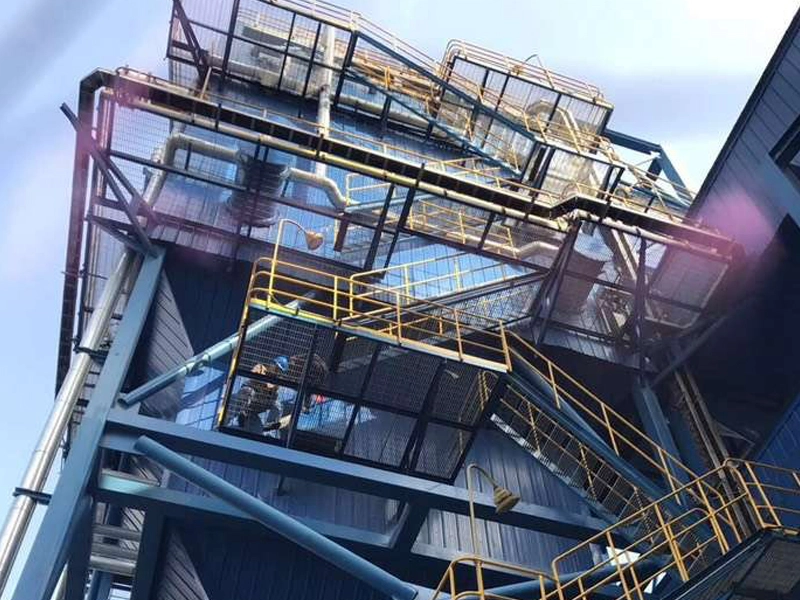
Due to its strength and smooth surface design, press locked grating is used in various industrial and commercial environments.
Typical applications include:
Industrial walkways and platforms
Stair treads and access systems
Architectural flooring and decorative structures
Chemical plants and manufacturing facilities
In industrial environments, grating systems must often withstand heavy traffic, equipment loads, and continuous operation. The stable structure of press locked designs makes them suitable for areas requiring reliable performance.
For projects where a more enclosed or customized surface is needed, interlocking grating solutions may also be considered as an alternative depending on specific requirements.
Choosing the correct grating requires evaluating several engineering factors. Load requirements should be considered first because different applications require different bar sizes and spacing designs.
Environmental conditions are another important factor. Outdoor installations or corrosive environments may require galvanized or specially treated surfaces to improve durability.
Key factors include:
Required load capacity and span distance
Material selection and corrosion protection
Installation conditions and maintenance requirements
Engineers should also consider whether the grating needs to provide additional functions, such as anti-slip performance, ventilation, or aesthetic appearance.
Working with an experienced supplier can help ensure that the selected grating meets both safety requirements and project expectations.
Choosing a reliable supplier helps ensure consistent quality and suitable product performance. Sino-Grating provides steel grating solutions for industrial, commercial, and infrastructure applications, including press locked products and other customized grating systems.
With experience in steel grating production, Sino-Grating supports different project requirements through various structures, dimensions, and surface treatments. The company provides solutions designed for industries such as manufacturing, energy, transportation, and industrial construction.
For engineers looking for durable and flexible grating options, selecting the right product design and supplier support can improve project reliability and long-term performance.
They generally refer to the same type of grating structure using a pressure-locking manufacturing method.
Yes. Properly designed press locked grating can support heavy loads according to project requirements.
Yes. Galvanized surface treatment can improve corrosion resistance for outdoor and industrial applications.
It is commonly used in platforms, walkways, stair systems, and industrial facilities.
Strength depends on factors such as material type, bearing bar size, spacing, and load conditions.
Yes. Customized dimensions and specifications can be provided according to project requirements.
With its strong interlocking structure, smooth appearance, and flexible design options, press locked grating provides an effective solution for many industrial and architectural applications. By comparing manufacturing methods, load requirements, and environmental conditions, engineers can select a grating system that delivers reliable long-term performance.