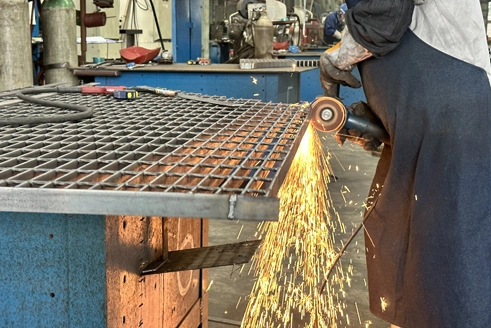
Choosing between serrated and plain steel grating is not simply a matter of selecting the surface that looks more slip-resistant. The correct choice depends on whether the grating will be exposed to water, oil, mud, process residue, ice or other contaminants, as well as the slope, footwear, maintenance conditions and applicable project requirements.
Plain steel grating provides a relatively flat walking surface and is widely used in dry industrial platforms, maintenance areas, ventilation floors and general access systems. Serrated steel grating has notches along the top edges of the bearing bars, creating additional surface edges that can improve traction in wet or contaminated environments.
However, a serrated profile does not make a walkway slip-proof under every condition. The final selection should consider the complete walking surface, drainage, contaminants, cleaning practices, bearing bar spacing, structural loads and installation details.
| Comparison Item | Plain Steel Grating | Serrated Steel Grating |
| Top surface | Flat upper edge on the bearing bars | Notched or toothed upper edge on the bearing bars |
| Traction | Suitable where the walking surface normally remains dry and clean | Provides additional surface edges for wet, oily or contaminated conditions |
| Cleaning | Smoother surface can be easier to sweep or wipe | Serrations may retain fine debris and require more detailed cleaning |
| Typical applications | Indoor platforms, equipment access, ventilation flooring and general walkways | Outdoor platforms, process areas, stairs, ramps, marine facilities and wet walkways |
| Load capacity | Determined by bearing bar size, pitch, span, material and load criteria | Also determined by bearing bar size, pitch, span, material and load criteria |
| Cost | Generally involves a simpler bearing bar profile | May involve additional processing and should be quoted for the specified configuration |
| Best selection basis | Low contamination risk and normal walking conditions | Higher slip risk caused by moisture, oil or process contamination |
Plain steel grating is manufactured with bearing bars that have a flat top edge. The bearing bars run in the load-carrying direction, while cross bars connect and stabilize them at regular intervals.
The flat upper surface creates a straightforward walking and working platform. It is commonly selected where the grating is installed in a relatively dry environment and where water, oil, mud or other contaminants are not expected to remain on the walking surface.
Plain grating does not mean low-strength grating. A plain surface can be used with light-duty, standard or heavy-duty bearing bar configurations. Its structural capacity depends on the bearing bar section, spacing, support span, material and design load—not on whether the top edge is plain or serrated.
A professional steel bar grating manufacturer can produce plain grating in different bearing bar sizes, pitches, panel dimensions and finishes to meet the required platform or walkway design.
Relatively smooth and consistent walking surface;
Suitable for dry indoor and sheltered applications;
Easier removal of dust and loose debris from the top surface;
Available in multiple bearing bar sizes and pitches;
Can be fabricated into platforms, walkways, stair treads and trench covers;
Compatible with hot-dip galvanizing, painting and other specified finishes;
Can provide a cleaner visual appearance for architectural or commercial projects.
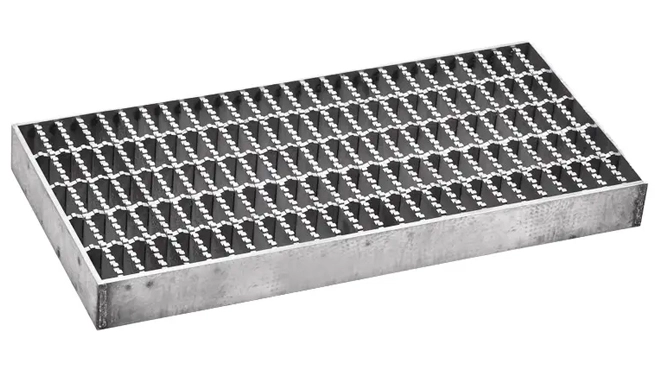
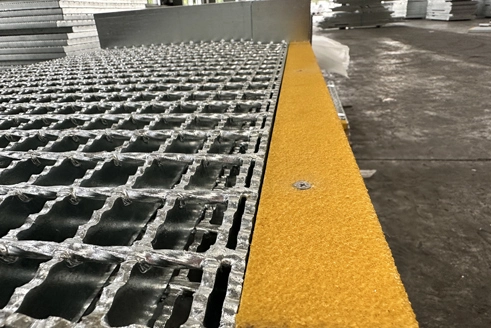
Serrated steel grating uses bearing bars with notches or teeth formed along their top edges. These serrations create more contact edges between the grating and footwear than a completely flat bearing bar surface.
The additional edges can improve traction when the surface is exposed to rain, wash water, light oil, mud or other contaminants. Serrated grating is therefore commonly considered for outdoor access routes, industrial processing areas, stairs, ramps, marine platforms and maintenance walkways.
The exact serration pattern can vary according to the manufacturing process, bearing bar size and supplier. Buyers should not assume that every serrated grating product provides identical slip performance. When a project specifies a particular slip-resistance result, the test method, surface finish and acceptance requirement should be stated in the procurement documents.
Provides additional surface edges underfoot;
Can improve traction in wet or contaminated conditions;
Suitable for many outdoor industrial walkways and platforms;
Can be manufactured with different bearing bar sizes and pitches;
Available for standard and heavy duty steel grating configurations;
Can be used in stair treads, trench covers and equipment access areas;
Can be supplied with hot-dip galvanized or other specified surface treatments.
Serrated bearing bars generally provide more mechanical edges than plain bearing bars and may improve traction under wet or contaminated conditions. However, the surface profile is only one part of slip-risk management.
Actual walking conditions are influenced by several interacting factors:
The type and amount of contamination;
Whether water or liquid can drain through the grating;
The bearing bar and cross bar pitch;
The direction and depth of the serrations;
The surface treatment applied after fabrication;
The angle or slope of the walkway;
The footwear worn by personnel;
Pedestrian speed and direction of travel;
Wear, corrosion and accumulated debris;
Cleaning and maintenance frequency;
The fastening and stability of the installed panels.
A serrated surface covered by thick grease, packed mud or ice may still become hazardous. Likewise, loose or moving grating panels can create a trip or stability risk even if their bearing bars are serrated. Surface selection should therefore be combined with appropriate drainage, cleaning, inspection, fastening and workplace controls.
For outdoor walkways exposed to rain, serrated steel grating can provide additional contact edges while the open grid allows water to drain. The grating layout should still prevent low points where water, dirt or ice can accumulate.
Oil and grease can reduce friction on both plain and serrated surfaces. Serrations may provide additional grip, but they should not be treated as a complete solution for heavy process contamination. The project should also consider drainage, housekeeping, footwear and whether a more aggressive safety surface is required.
Fine debris may collect around bearing bars and serrations. A more aggressive profile can be useful, but only when the openings remain clear and the surface is regularly maintained. The panel pitch should be selected with both drainage and the passage of objects in mind.
Serrations may provide additional edges, but they do not eliminate the risk created by ice. Snow and ice management remains necessary on exposed stairs, platforms and walkways.
Chemical exposure affects more than slip resistance. It may also determine whether galvanized carbon steel, painted steel, stainless steel grating or another material is appropriate. The chemical concentration, temperature, cleaning process and exposure duration should be reviewed before material selection.
Plain steel grating is often suitable where the environment is generally dry, the walking route is level and the contamination risk is controlled.
Plain grating can be used for maintenance and operating platforms inside factories, warehouses and utility buildings where the surface is protected from weather and process leakage.
Platforms around equipment may use plain grating when liquids are not expected to reach the walking surface. The design should still account for maintenance loads, tools, removable panels and required access openings.
The open structure of steel grating allows air, light and heat to pass through. Plain grating may be selected for ventilation floors, service areas and elevated access routes that remain dry during normal operation.
Plain bearing bars may provide a cleaner and more uniform appearance for screens, façades, sunshades and other architectural uses. Where precise grid alignment and visual consistency are important, press-locked steel grating may also be considered.
Plain grating can be suitable for general industrial walkways when site risk assessments and project specifications do not require a more aggressive surface.
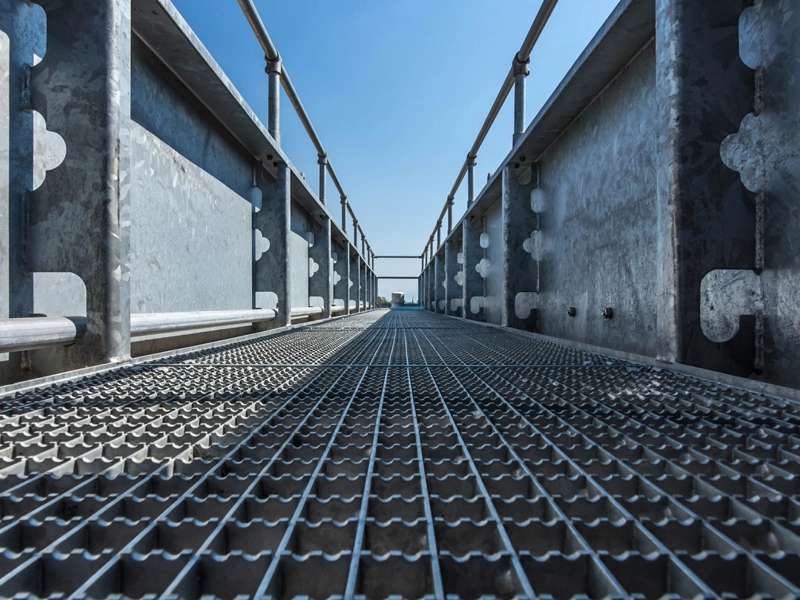
Serrated grating is generally considered where moisture or industrial contamination can increase the likelihood of slipping.
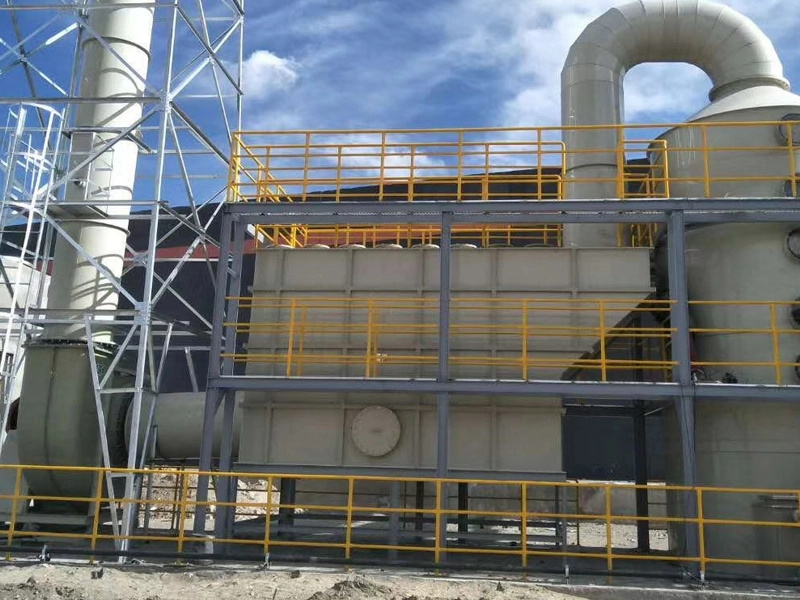
Rain, condensation and airborne dirt can affect outdoor walking surfaces. Serrated grating is frequently specified for exposed industrial platforms, maintenance routes and access bridges.
Platforms around pumps, vessels, piping and process equipment may be exposed to oil, water or chemical residue. Serrated grating can provide additional surface edges, while material and coating selection should be based on the actual corrosive environment.
Marine facilities can be exposed to spray, rain, salt, mud and continuous outdoor conditions. Serrated grating may be used for access routes and maintenance platforms, but corrosion resistance, fastening and inspection requirements are equally important.
Industrial platforms in power generation and metal-processing facilities may be exposed to water, dust, lubricants and process residue. The selected surface should reflect the expected contamination and cleaning regime.
Walkways near tanks, channels and treatment equipment are often exposed to moisture. Serrated steel grating may be considered where the environment and corrosion conditions permit the use of steel.
Stairways require careful attention because slipping can have more severe consequences on a change in elevation. Serrated bearing bars and an appropriate nosing may be specified for steel grating stair treads.
A serrated surface may be useful where a steel trench cover grating is located in a pedestrian or maintenance route exposed to water. The design must also account for traffic loads, support frames, clear openings and safe lifting.
| Application Condition | Plain Grating | Serrated Grating | Additional Review |
| Dry indoor platform | Often suitable | May be used if required | Loads, span, opening size and fastening |
| Outdoor walkway exposed to rain | Requires project review | Commonly considered | Drainage, ice, coating and maintenance |
| Oily industrial area | May provide insufficient traction | May improve traction | Contaminant level, cleaning and footwear |
| Industrial stair tread | Possible for controlled dry areas | Often preferred for demanding conditions | Nosing, dimensions, load and fixing |
| Marine or offshore platform | Requires careful assessment | Frequently considered | Corrosion, salt exposure and fastening |
| Vehicle or heavy equipment area | Possible with a verified heavy-duty design | Possible with a verified heavy-duty design | Wheel loads, impact, fatigue and support layout |
| Architectural application | Often selected for appearance | Selected where traction is also required | Grid alignment, finish and visual requirements |
| Area with heavy mud or packed debris | Requires maintenance review | Requires maintenance review | Cleaning access and a more aggressive safety surface |
This comparison is a starting point rather than an engineering approval. Project-specific safety, structural and environmental requirements take precedence.
Serrated bar grating and safety plank grating are not the same product.
Serrated bar grating is built from load-bearing bars and cross bars, with notches formed along the top of the bearing bars. It provides an open grid suitable for platforms, walkways, stairs, drainage covers and structural flooring.
Safety plank grating is generally manufactured from formed or perforated sheet metal. Products such as Grip Strut plank grating and perforated O Grip plank grating use raised or perforated surface patterns designed for walking traction and drainage.
| Comparison Item | Serrated Bar Grating | Safety Plank Grating |
| Construction | Bearing bars connected by cross bars | Formed or perforated sheet-metal plank |
| Walking surface | Serrations along the bearing bar tops | Raised, perforated or embossed traction pattern |
| Typical form | Panels fabricated to fit a structural opening | Narrow planks used individually or side by side |
| Common use | Industrial floors, platforms, stairs and trench covers | Walkways, ramps, access routes and equipment platforms |
| Selection basis | Span, bearing bar size, pitch, loads and surface condition | Plank profile, width, depth, span, loads and surface condition |
If the walking area is routinely exposed to heavy oil, mud or process residue, compare serrated bar grating with available safety plank profiles rather than automatically assuming that one surface is sufficient.
Plain and serrated grating should not be treated as structurally interchangeable without reviewing the manufacturer’s data. The primary factors controlling load capacity include:
Bearing bar depth and thickness;
Bearing bar spacing;
Cross bar construction;
Material grade;
Clear support span;
Uniform and concentrated loads;
Vehicle or impact loads where applicable;
Allowable stress and deflection;
Support and fastening conditions.
The surface profile should be stated in addition to the structural specification. Do not select a bearing bar size from a plain-grating load table and assume that every serrated product with nominally similar dimensions will provide identical performance.
Hot-dip galvanized steel grating is widely used for outdoor and industrial applications. Galvanizing protects the carbon steel surface, but the coating also becomes part of the final walking surface. When slip performance is critical, any supporting test data should represent the finished product rather than an unfinished bearing bar.
Paint type, coating thickness, wear and contamination can affect the final surface. A smooth coating should not be assumed to provide the same walking characteristics as an uncoated or purpose-designed traction surface.
Stainless steel may be selected for corrosive, hygienic or appearance-sensitive environments. The stainless grade, surface treatment and cleaning method should be specified separately from the plain or serrated profile.
Traffic, abrasion, corrosion and repeated cleaning can alter the walking surface over time. Inspection plans should cover worn serrations, damaged coatings, loose panels, clogged openings and contaminated surfaces.
Good surface traction does not compensate for an unstable installation. Panels should be adequately supported and fixed so they do not rock, lift, shift or create uneven joints.
The fastening method should be coordinated with the bearing bar spacing, support shape and maintenance requirements. Removable panels can use suitable steel grating clips, while permanent installations may use another approved connection method.
The installation review should include:
Panel bearing on the supporting steelwork;
Clearance between adjacent panels;
Level differences at panel joints;
Clip type, quantity and location;
Potential movement under pedestrian or equipment traffic;
Cutouts around pipes, columns and machinery;
Banding and toe-plate requirements;
Access for inspection and cleaning.
A request stating only “anti-slip grating” is not specific enough for an accurate quotation. Include the following information whenever available:
Required surface profile: plain or serrated;
Description of expected water, oil, mud, chemicals or other contaminants;
Indoor, outdoor, marine or process environment;
Walkway slope and installation orientation;
Applicable slip-resistance requirement and test method, if specified;
Bearing bar depth and thickness;
Bearing bar pitch;
Cross bar size and pitch;
Clear support span;
Uniform, concentrated, vehicle or impact loads;
Material grade;
Hot-dip galvanized, painted or other required finish;
Finished panel dimensions and bearing bar direction;
Banding, cutouts, toe plates and nosing requirements;
Fastening system and removable-panel requirements;
Inspection, documentation, marking and packaging requirements;
Layout drawings or structural opening dimensions.
If the surface profile has not yet been selected, provide the actual operating conditions instead of asking the manufacturer to choose based only on the industry name.
Serrations can improve traction, but heavy oil, mud, ice or process residue can still create a hazardous surface. Cleaning, drainage, footwear and inspection remain necessary.
Surface shape and structural capacity are separate considerations. Plain grating can be manufactured for demanding loads when the bearing bars, pitch, span and support arrangement are properly designed.
Galvanizing, paint and other coatings affect the finished walking surface. Technical reviews and slip-resistance data should reflect the supplied finish.
A dry indoor walkway and an oily process platform do not present the same risk. The expected contaminants and cleaning routine should be defined before choosing a surface.
Serrated bars do not automatically provide greater load capacity. Loads and spans must still be checked against the complete product configuration.
Plain and serrated surfaces do not determine whether small objects can pass through the grating. If the project has controlled-opening requirements, bearing bar pitch and clear opening must be specified separately.
If both surfaces are used in one project, the layout should clearly identify each panel type. This reduces the risk of installing plain panels in areas intended to receive serrated grating.
No. Serrated grating is useful where moisture or contamination increases slip risk, while plain grating may provide a more suitable and easier-to-clean surface in controlled dry areas. The best option depends on the actual application.
Yes. Serrated carbon steel grating can be hot-dip galvanized. The required galvanizing standard and finish should be included in the purchase specification.
Not automatically. Load capacity depends mainly on the bearing bar size, pitch, material, span, loads and support conditions. Use product-specific load data for the selected serrated configuration.
A wet plain surface may provide less traction than a comparable serrated surface, but actual slip risk also depends on contaminants, drainage, footwear, slope and maintenance.
Serrated bearing bars are often considered for outdoor or demanding industrial stairs. The tread design should also include the required nosing, dimensions, side plates, fastening holes and structural capacity.
It may provide additional traction, but heavy grease or oil can still cover the serrations. Cleaning, drainage and comparison with a more aggressive safety plank surface may be necessary.
Yes. Plain grating may be used in dry, controlled areas, while serrated grating is installed in wet or contaminated zones. The layout and panel markings should clearly distinguish the two products.
Provide the operating environment, contaminants, loads, clear span, bearing bar size and pitch, panel dimensions, material, finish, required surface profile, quantity, fastening method and drawings.
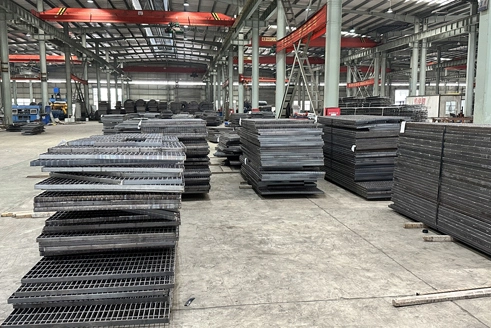
Sino Grating is a professional steel grating manufacturer with more than 20 years of industry experience. We manufacture plain and serrated steel grating products for industrial platforms, walkways, stair treads, trench covers, heavy-load areas and customized structural applications.
Available product options include welded steel bar grating, press-locked grating, heavy duty grating, stainless steel grating, raw panels, stair treads, trench covers and compatible fastening components. Panels can be customized according to the required bearing bar size, pitch, dimensions, cutouts, banding and surface treatment.
Send Sino Grating your application conditions, expected contaminants, design loads, clear support span, panel layout, material and finish requirements. Our team can help review the surface profile and manufacturing details before preparing a project-specific quotation.
Contact Sino Grating to Request a Plain or Serrated Steel Grating Quote